
Responsible Gambling
Gambling should always remain a form of entertainment rather than a financial strategy or emotional coping mechanism. At Jackpot City Casino, we promote a safe and informed approach to all gambling-related activities, ensuring users understand both the risks and the importance of maintaining control. Our platform is designed for informational and review purposes, helping players make educated decisions.
We strongly encourage all visitors to approach gambling with awareness of personal limits, financial boundaries, and emotional wellbeing. If gambling stops being enjoyable or begins to feel stressful, it may be a sign to take a break and reassess behaviour. Responsible gambling is a continuous practice, not a one-time action.
This page outlines practical tools, behavioural insights, and UK-specific support services that can help maintain safer gambling habits. Whether you are a casual player or an experienced user, understanding responsible gambling principles is essential for long-term wellbeing.
Core Principles Behind Responsible Gambling Behaviour
Responsible gambling is built on the foundation of control, awareness, and informed decision-making. It is essential to treat gambling as paid entertainment, where losses are expected and should never exceed personal financial comfort levels.
Another key principle is understanding randomness and probability. Outcomes in casino games are never influenced by previous results, meaning chasing losses or relying on “hot streaks” can quickly lead to harmful behaviour patterns.
We also emphasise the importance of emotional neutrality. Gambling should never be used as a way to escape stress, anxiety, or financial pressure, as this significantly increases the risk of developing problematic behaviour.
Recognising Early Signs of Harmful Gambling Patterns
Early identification of problematic gambling behaviour can prevent long-term harm. Common warning signs include increasing bet sizes, chasing losses, or feeling unable to stop despite negative consequences.
Other indicators may involve secrecy, borrowing money to gamble, or prioritising gambling over personal and professional responsibilities. These behavioural shifts often develop gradually and may go unnoticed at first.
Emotional signals such as irritability, guilt, or anxiety after gambling sessions can also suggest an unhealthy relationship with gambling activities and should not be ignored.
Developing Safer Gambling Habits in Daily Practice
Establishing safer gambling habits begins with setting strict time and spending limits before any gameplay. These boundaries should be realistic and never adjusted during emotional decision-making moments.
Taking regular breaks is equally important, as continuous play can distort perception of time and money. Structured pauses help maintain clarity and prevent impulsive decisions.
Using deposit limits and session reminders provided by operators can further support controlled behaviour, ensuring gambling remains within pre-defined boundaries.
Maintaining a balance between gambling and other leisure activities reduces dependency and helps preserve a healthy lifestyle structure overall.
Emotional Wellbeing and Gambling Awareness
Emotional wellbeing plays a central role in responsible gambling. Stress, loneliness, or frustration can negatively influence decision-making, increasing the risk of impulsive betting behaviour.
It is important to recognise emotional triggers and avoid gambling during vulnerable mental states. Healthy coping mechanisms such as exercise, social interaction, or relaxation techniques should be prioritised instead.
If gambling begins to affect mood stability or self-esteem, it is advisable to seek external support and consider temporary or permanent breaks from gambling activities.
Managing Financial Control and Gambling Budgets
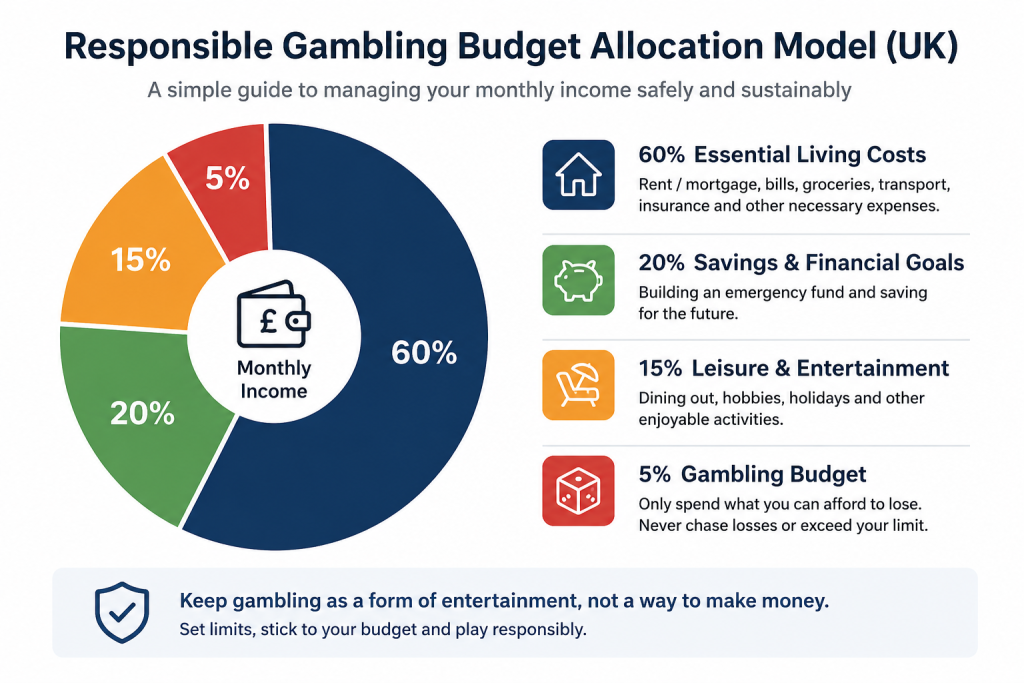
A clear financial plan is essential for responsible gambling. Users should only gamble with disposable income and never allocate funds intended for essential living expenses.
Setting weekly or monthly gambling budgets helps maintain control and prevents overspending. Once the limit is reached, gambling activity should stop immediately without exception.
Tracking losses and wins can also provide better financial awareness, helping users understand their actual spending patterns over time.
Avoiding credit-based gambling is strongly recommended, as borrowing money increases financial risk and can quickly escalate problematic behaviour.
Self-Exclusion Tools and Account Restriction Options
Self-exclusion tools allow users to temporarily or permanently block access to gambling platforms. These systems are designed to support individuals who feel their gambling habits are becoming difficult to control.
UK users can register with GAMSTOP, a national self-exclusion scheme that restricts access to licensed gambling sites across the country.
Additional support tools include BetBlocker and Gamban, which help block gambling websites and apps across multiple devices.
Using Gambling Blocking Software Effectively
Blocking software provides an additional layer of protection for individuals struggling to control their gambling behaviour. These tools are especially useful when self-control alone is not sufficient.
Applications such as GamBlock or NetNanny restrict access to gambling platforms and can be installed on personal devices to prevent impulsive betting.
Combining blocking software with self-exclusion services creates a stronger barrier, reducing the likelihood of relapse during vulnerable periods.
Protecting Minors and Vulnerable Individuals
Protecting minors from gambling exposure is a legal and ethical priority. Gambling services are strictly intended for individuals aged 18 and over in the United Kingdom.
Parents and guardians should use parental control tools and monitor device usage to prevent underage access to gambling-related content.
Educational discussions about gambling risks can also help young individuals understand the importance of responsible behaviour and financial awareness.
Common Gambling Myths and Misconceptions
One common misconception is that gambling outcomes can be predicted based on previous results. In reality, all casino games are governed by random number generation systems.
Another myth is that losses can be recovered with continued play. This “chasing losses” mentality often leads to greater financial harm rather than recovery.
Understanding that gambling is not a reliable income source is essential for maintaining a healthy and realistic perspective.
Emotional and Financial Consequences of Gambling Addiction
Gambling addiction can have serious emotional consequences, including anxiety, depression, and strained relationships. These effects often intensify over time without intervention.
Financial consequences may include debt accumulation, reduced savings, and difficulty meeting essential expenses, which can significantly impact quality of life.
Early intervention and support can reduce these risks and help individuals regain control over their financial and emotional wellbeing.
Long-term recovery often requires a combination of behavioural change, external support, and structured financial management strategies.
Practical Strategies for Safer Gambling Control
Practical strategies include setting strict limits, avoiding emotional gambling, and using built-in operator tools such as deposit caps and time reminders.
Keeping a gambling diary can also help track behaviour patterns and identify potential risk triggers over time.
Users are encouraged to take regular breaks and engage in non-gambling activities to maintain a balanced lifestyle.
If control becomes difficult, immediate use of self-exclusion tools is strongly recommended.
Support for Family Members and Friends
Family members and friends often play a key role in identifying problematic gambling behaviour. Open communication can help encourage individuals to seek support earlier.
Support networks can also benefit from guidance provided by organisations such as GamCare, which offers resources for affected individuals and their families.
It is important for loved ones to avoid judgment and instead focus on constructive support and encouragement towards professional help.
Seeking Professional Help and UK Support Services
Professional help is available for individuals experiencing gambling-related harm. Services such as BeGambleAware provide confidential support and guidance.
The Gambling Therapy platform offers online counselling and peer support for individuals worldwide, including UK users.
For more structured treatment, the National Problem Gambling Clinic provides specialist care for those with severe gambling addiction symptoms.
Additional services such as Gamblers Anonymous UK offer group-based recovery support and long-term peer encouragement.
UK Bank Gambling Transaction Blocking Options
Many UK banks now offer gambling transaction blocks that allow customers to restrict payments to gambling operators directly through banking apps.
These features help users maintain financial control by preventing deposits to gambling sites, adding an extra layer of protection beyond platform-level tools.
Contacting your bank directly can provide guidance on activating or customising these restrictions based on personal financial needs.
External Gambling Support Organisations
Several UK-based organisations provide specialised support for gambling-related harm. GamCare offers counselling and structured recovery programmes.
BeGambleAware provides educational resources and confidential advice for individuals concerned about gambling habits.
The Gamblers Anonymous UK community offers peer-led support groups for long-term recovery.
Specialist clinics such as Gordon Moody provide residential treatment programmes for severe gambling addiction cases.
Emergency Support and Immediate Help Resources
If gambling behaviour is causing severe emotional distress, immediate support is available through Samaritans, which offers 24/7 confidential assistance.
Users experiencing crisis situations should seek professional help immediately and avoid continuing gambling activities until stability is restored.
Affiliate Disclosure and Informational Purpose
Jackpot City Casino is an informational affiliate website that provides reviews, guides, and educational content about online gambling platforms, bonuses, and gaming features. We do not operate gambling services directly.
Some links on our platform may be affiliate links, meaning we may receive a commission at no additional cost to users. This helps support the maintenance of our content while keeping information free and accessible.
We strongly encourage users to use our content as informational guidance only and always engage with gambling platforms responsibly and within legal UK regulations.
For more information, please refer to our Terms & Conditions, Privacy Policy, FAQ, and About pages.
Contact Information
| Contact Type | Details |
|---|---|
| [email protected] | |
| Contact Page | Contact Form |
| Responsible Gambling Enquiries | Use email or contact form with subject “Responsible Gambling Support” |
Frequently Asked Questions (Responsible Gambling)
How do I know if my gambling is becoming a problem?
If gambling starts affecting your finances, emotions, or relationships, or if you feel unable to stop, it may indicate a developing issue that requires attention and support.
Can I completely block myself from gambling sites?
Yes, services like GAMSTOP and blocking software such as BetBlocker allow UK users to restrict access to gambling platforms across devices and operators.
What should I do if I feel stressed after gambling?
Taking a break, speaking to support organisations like GamCare, and reassessing your gambling habits can help restore emotional balance and control.
Are gambling losses recoverable?
No, losses should never be chased. Gambling outcomes are random, and continued play to recover losses often leads to further financial harm.
Where can I get immediate help?
You can contact Samaritans or BeGambleAware for urgent emotional and practical support related to gambling concerns.